
Examplary
  • Start for free

    What's new in Examplary

    Every new feature, improvement, and fix we ship, in chronological order.

    1. Support for Safe Exam Browser now available

      Support for Safe Exam Browser now available

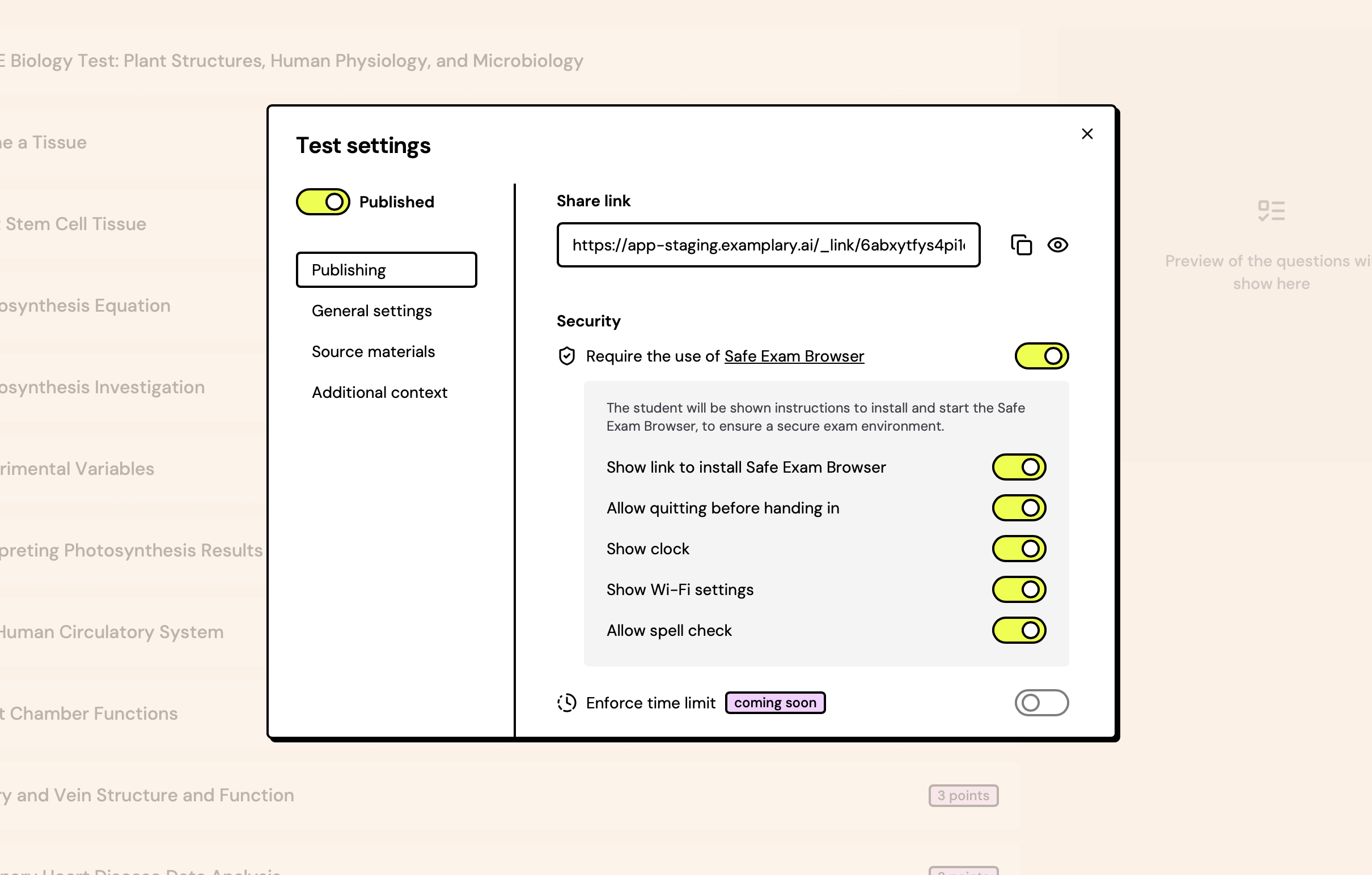
      Safe Exam Browser is a web browser environment to carry out e-assessments safely. The software turns any computer temporarily into a secure workstation.

      For any Examplary test, you can require the use of Safe Exam Browser and set limitations on what a student can do whilst they’re taking the test.

      You can still send the link to the student as per usual – they’ll be shown a message with instructions to download Safe Exam Browser if they open the link in a normal browser.

    2. Launch Examplary tests from your LMS

      Examplary now supports LTI resource selection. That means teachers using a learning management system that speaks LTI can pick an Examplary test directly from within their LMS and embed it into their course.

    3. See final grades in the sessions list

    4. A new Developers page

      We've added a dedicated Developers page to your account settings. Here you'll find your workspace API key, links to our developer documentation, and a separate page to enable or disable question types in your workspace.

      This is the starting point for building custom integrations and question types on top of Examplary.

    5. Import Moodle quizzes

      Moving from Moodle? You can now import a Moodle quiz XML file directly into Examplary. Questions, answers, and metadata come across in one go, so you don't have to rebuild your question bank from scratch.

      From there, you can edit, reuse, and combine the imported questions with anything else in Examplary.

    6. Upload larger source documents

    7. Organize your tests in folders

      You can now group your tests into folders. Create a folder per class, per term, or per subject - whatever keeps your workspace tidy.

      Move any test between folders with the "Move to folder" option in its menu.

    8. Print your tests on paper

      Sometimes paper is still the right tool. You can now export any test as a PDF, ready to print, in either A4 or Letter size.

      Use the print preview to check the layout before you export.

    9. Attach files and images to questions

      You can now drag and drop images and files directly into the question editor. Images are embedded inline, and other files appear as clickable attachments that students can open while they take the test.

      This makes it much easier to build questions around source materials you already have — a diagram, a passage of text, or a reference document.

    10. Introducing conversational questions

      Conversational questions are a new question type where students have a short dialogue with AI about a topic, instead of giving a single written answer.

      You write a prompt that tells the AI how to interact with the student, and completion criteria that define when the conversation is done. The AI then asks follow-up questions to guide the student through the conversation.